At the Nadir
Is American environmental law at its nadir? With so many unfulfilled promises, impending enactment of a major rollback of bedrock federal statutes, a failed international climate conference, and headwinds everywhere we turn, it sure feels like it. But that's no reason to give up.

Is American environmental law at its nadir? With so many unfulfilled promises, impending enactment of a major rollback of bedrock federal statutes, a failed international climate conference, and headwinds everywhere we turn, it sure feels like it. But that's no reason to give up; we have a better future to build, and our students are eager to get started.
1.
Earlier this year, I helped organize and co-moderated an alumni weekend panel at Vermont Law and Graduate School. During this year commemorating our school’s fiftieth commencement, the goal was to celebrate the school’s legacy as a leader in environmental law and policy and look ahead to how our programs should meet the challenges facing the field. Then-VLS began at the field’s most generative moment, contemporaneous with the enactment of our cornerstone federal laws that protect our water, air, health, and wildlife. Along with my co-moderator, former VLGS leader and environmental lawyer David Mears, the panel featured two legends of environmental law, Gus Speth and Pat Parenteau, each a key player in the development and implementation of the environmental laws of the 1970s, and three leading advocates who are forging new paths forward: alum and visiting faculty member Lindi Mutius Widell, trustee Tamara Toles O’Laughlin, and former VLGS leader Jenny Rushlow.
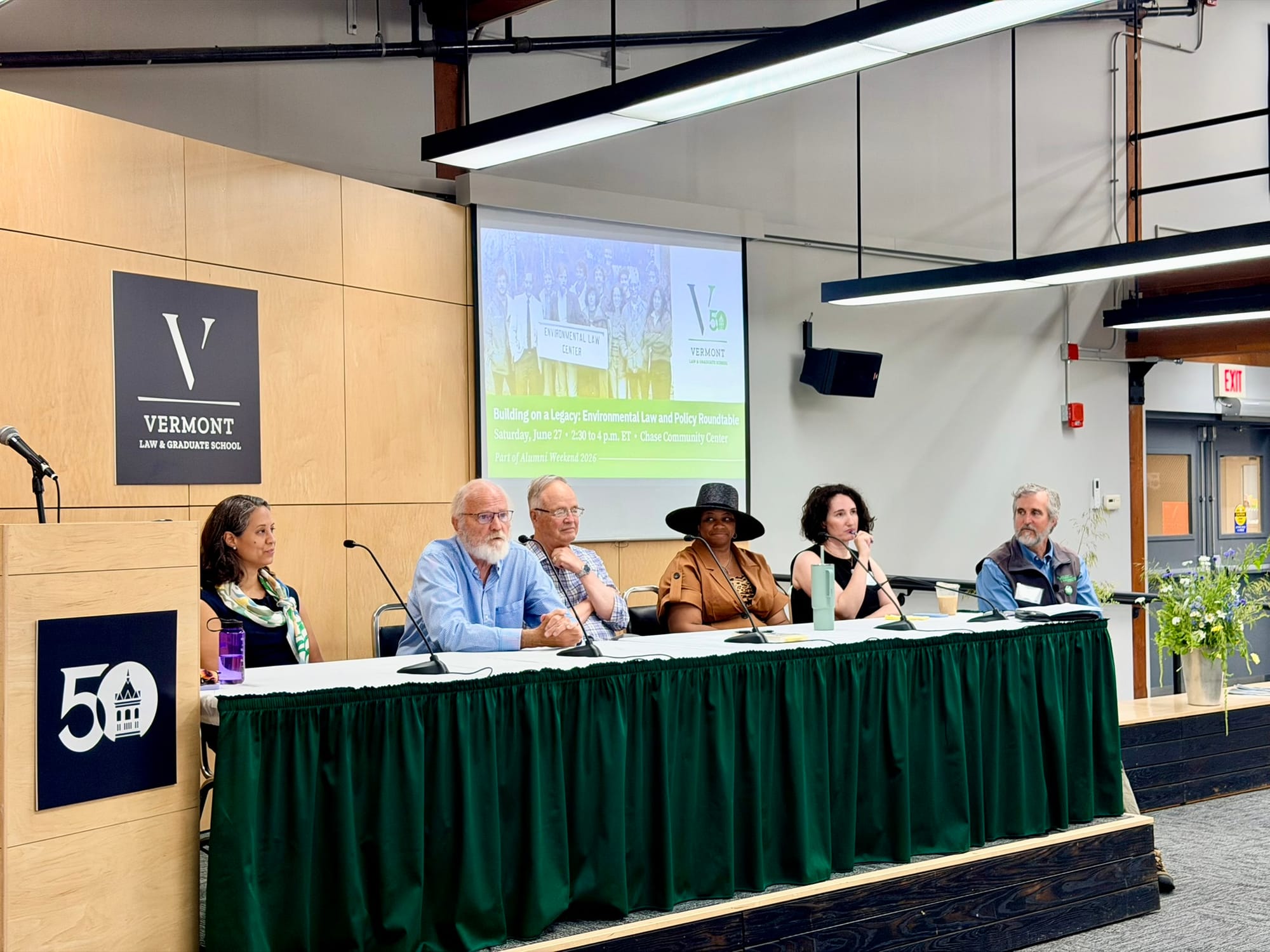
I recommend our podcast sharing key discussions from the nearly two-hour panel, but to summarize:
Gus and Pat agreed that, while environmental law has had successes we should celebrate, it also has failed to live up to its aspirations. Pat was proud that our faculty and alums have fought for environmental values every step of the way, in many ways and in many places. But we have lost some of the most important fights of the last decade, especially in the judiciary. Gus emphasized that this was downstream of the political failings of the environmental movement, which has not effectively built political power.
Tamara provided a different perspective, suggesting that the policies of the last fifty years were hard fought but their failings were not accidents at all. Rather, their gaps are a product of their design by a very small group of people, with many blind spots and too often operating in silos without the context of other fights for justice. Tamara celebrated our talented graduates who go off into the world and are doing the hard work we need to cultivate. Lindi likewise highlighted how our clinics and our students are not deterred, and our Environmental Justice Clinic, which she leads, is working alongside communities to fight for environmental justice, including in the South. For her part, Jenny pointed out that the technical details matter, fights can be won with smart advocates who understand those details, and our school has the tools and the people to empower students to master those details. She also said that this work to come will require creativity and a wide range of advocacy, including aggressive approaches that reckon with the forces opposing environmental progress.
2.
This month, the American electorate with impressive clarity repudiated the federal administration’s many profoundly unpopular policies, not least a Mideast war that has spiked fuel prices and a series of tariffs that have made all manner of goods more expensive. Like so many, I stayed up late to watch the returns, and, without the gut-churning turns of past elections, the story was unmistakable. State after state, supposedly safe Republicans lost their seats, and all the closer races broke decisively for Democrats. It was especially notable that the results—especially across the South but certainly elsewhere—were so overwhelming that they managed to overcome the many threats to democracy during this Administration’s first two years, including the Supreme Court’s evisceration of voting rights and the immediate racial gerrymandering that ensued in Republican controlled states. Another theme was widespread voter rejection of steamroller AI data center development, itself a demand that local communities have control over their own futures.
Instead of jubilation and creative planning for what lies ahead, the environmental law world is facing its own repudiation, including by Congressional and other influential voices who have been our allies. I mean, of course, the so-called “permitting reform” package known as the Bipartisan American Affordability and Jobs Act or BAAJA. BAAJA emerged from the offices of Senate negotiators in late September, and, whether lulled by the failure of prior such efforts, busy with the urgency of the run-up to the election, strong-armed into initial openness, or daunted by the complexity of the legislative language that had been crafted in private, the bill’s critics were slow to sound the alarm about what it would do. And what it would do is Faustian: trade key elements of the nation’s environmental rule of law for speedier energy, electric transmission, and every other kind of development. By now, others have explained the bill and its flaws in great detail, and I shared some thoughts on LinkedIn and joined a helpfully succinct legal-scholar letter explaining why the bill is so dangerous.
Perhaps most importantly, it decimates the requirements of the National Environmental Policy Act that federal agencies engage in a careful public process that accounts for the human and environmental impacts of their actions, by among other things permitting agencies to violate the law without fear of corrective judicial orders. BAAJA also imposes sweeping limits on the role of state and tribal officials in project reviews under the National Historic Preservation Act and undermines states’ ability to ensure that polluting projects protect water quality under the Clean Water Act. Proponents of the bill assert that its package of transmission reforms, many reliant on additional action by the Federal Energy Regulatory Commission, would unlock clean energy and accelerate needed grid improvements to support the energy transition. As of this writing BAAJA has passed the Senate and faces an uncertain but potentially smooth path in the GOP-controlled House during this lame-duck session.
For environmental law, this is a big moment. Certainly, these would be the most consequential changes to federal environmental laws since their passage and would unquestionably weaken them, by design. Indeed, BAAJA is the Congressional version of the administrative carnage of the first months of the current Trump term, when by executive order and agency actions the administration—in many instances unlawfully and in all instances with contempt for environmental and climate protection and public involvement—defunded and attacked seemingly every environmental and clean energy policy. I commented at the time on one of the biggest casualties—federal environmental justice policy.
BAAJA is abjectly hostile to environmental justice communities, depriving them of some of the few tools they have to challenge harmful projects that will add to their environmental burdens, including data centers and fossil fuel development. In a truly perverse provision, the bill creates a new legal remedy for developers to claim “disparate impact” from adverse agency decision-making, at a time when the Trump administration and the judiciary have eliminated mechanisms for marginalized communities to show disparate environmental harms. BAAJA also seeks to ratify the federal judiciary’s recent avalanche of decisions ferociously limiting environmental laws, especially Justice Kavanagh’s cri de coeur against NEPA in Seven County. And the bill—“fuel-neutral” to benefit fossil and clean energy alike—is completely in step with the Supreme Court majority’s skepticism at oral argument this fall that Boulder County should have any state-law remedy to hold oil companies accountable for climate adaptation costs that are burdening its residents; on campus, we held a panel recapping those arguments and released it as a podcast—another worthy listen.
At the state level, it should be said that the last few years since the pandemic have been dispiriting too: the mantra of affordability has been cover for diminished ambition—on clean energy investment, climate adaptation, pollution reduction, and more. Some state courts have tolerated truly terrible litigation by industry and its lawyers to silence public interest organizations and public officials, like the attacks on Greenpeace and advocates opposing plastics greenwashing. There are bright spots in state environmental law, like congestion pricing in New York, Vermont’s Climate Superfund Act, the Held decision in Montana, state environmental justice laws like New Jersey’s, and the Navahine settlement in Hawaii, but we need many more of them. And many state legislatures have been reticent to take bold environmental and climate action (or timely implement statutes already on the books, as in New York) for fears that it will be impractical or increase already-elevated consumer costs.
On the international stage, at this writing the annual UN climate change conference has just concluded, as it has for several years now, with aspirations of energy transition and international financial help for climate adaptation, but little to answer the clarion calls of the world’s most vulnerable nations for far more ambitious commitments to end fossil fuel use and meet those nations’ urgent adaptation needs. Crushingly, this year's conference failed to achieve a consensus outcome at all, thanks to objections from Russia and Saudi Arabia to including language on phasing out fossil fuels. VLGS's students were there, taking in the frustrations of the event and engaging with delegates from around the world.
A candid appraisal of COP31, from Panama’s environment minister
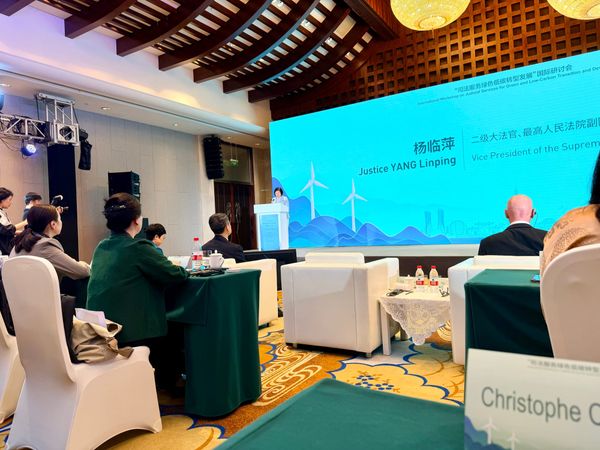
Eleven years after Paris, it is hard to see the world meeting the imperatives of climate science through international climate negotiations, especially with the lack of engagement by the United States and the obstructionism of the world’s largest petrostates. This low point does not tell the whole story of international environmental law, of course: last year saw landmark international law opinions affirming the climate obligations of countries by the International Court of Justice and the Inter-american Court of Human Rights. But enforcement of those decisions will be elusive. Certainly, the rapid electrification of transport and industry in China (which I saw firsthand this summer) and other clean energy progress, which participants in the conference sought to highlight, are directionally positive. But the fact remains that the largest emitters continue to resist emission limits and adaptation investments at the needed scales. In the United States and around the world, the meteoritic rise of AI data center energy demand threatens to overwhelm clean energy's acceleration and give a lifeline to fossil fuel development, contributing to more carbon and other pollution. These global challenges provide a depressing backdrop to the dispiriting debate on BAAJA in Congress.
3.
As a descriptive matter, it may be that the Congress’s consideration and potential passage of BAAJA is the nadir of American environmental law’s long erosion—a terminal collapse of elite support for safeguarding the field’s five-decade framework of aspirational goals of environmental improvement, cooperative federalism, procedural democracy, and judicial oversight. BAAJA takes a hatchet to these values, and it has the support of all the lobbies that have so doggedly sought to undermine them in the name of greater latitude for business to build what they want, when they want, with government acquiescence and, in the case of development on public lands, support and subsidy.
Certainly my friends Gus and Pat are right that the initial promises of our environmental law framework have not been fulfilled, and the framework has buckled and broken in recent years amid sustained hostility from conservative judges and destructive federal administrations. The advocates and practitioners who have gotten their start at VLGS have been key players in this fight, most on the side of preserving, enforcing, and expanding core environmental protections. And Lindi and Jenny are right that the important fights for environmental values in communities around the country are far from over, BAAJA headwinds notwithstanding. As Vermont’s tireless climate activist Bill McKibben said this week, “We’re in a new world, we’ve got to figure out the rules, and we’ve got to fight like hell. As if everything depends on it, because it does.” Figuring out the rules in the post-BAAJA landscape requires smart lawyers, yes, but as Tamara said, it requires smart politics at every level, including new policies that improve the real-life economics of working people’s lives and renewed momentum for the clean energy future that should be dawning.
That this moment could be a nadir implies that our next season will be the start of an upward trajectory —with a new Congress and many new leaders in many states, and fresh enthusiasm for something very different than the reconstructive reversions that characterized the first years of the Biden administration. It’s possible, though, that the nadir will persist for some time. The federal judiciary, reshaped in this century by two Bush and two Trump terms, has life tenure. The ongoing assault on every green initiative at the state level has limitless funding at its disposal. Anti-environmental sellouts and chicanery can continue while supposedly bigger issues dominate policy conversations, even with environmental champions in positions of power.
Living through the nadir of environmental law, while leading one of the nation’s finest environmental law programs, feels pretty dark. I feel devastated: for the betrayal of the marginalized communities that live with dirty air, unclean water, and other environmental hazards; for the climate calamities we could be addressing but aren’t; for the species like the right whale and northern long-eared bat on the brink of extinction thanks to politically powerful, shameless industries; for the blood, sweat, and tears of the generations of environmental and community advocates who worked tirelessly in the courts, in legislatures, in agency hearing rooms, and in the streets, and see the losses piling up.
But the devastation has not debilitated me and my VLGS colleagues. Why? Because the students in my and other environmental law classrooms around the world will shape the future of environmental law over its next fifty years. And they are amazing.
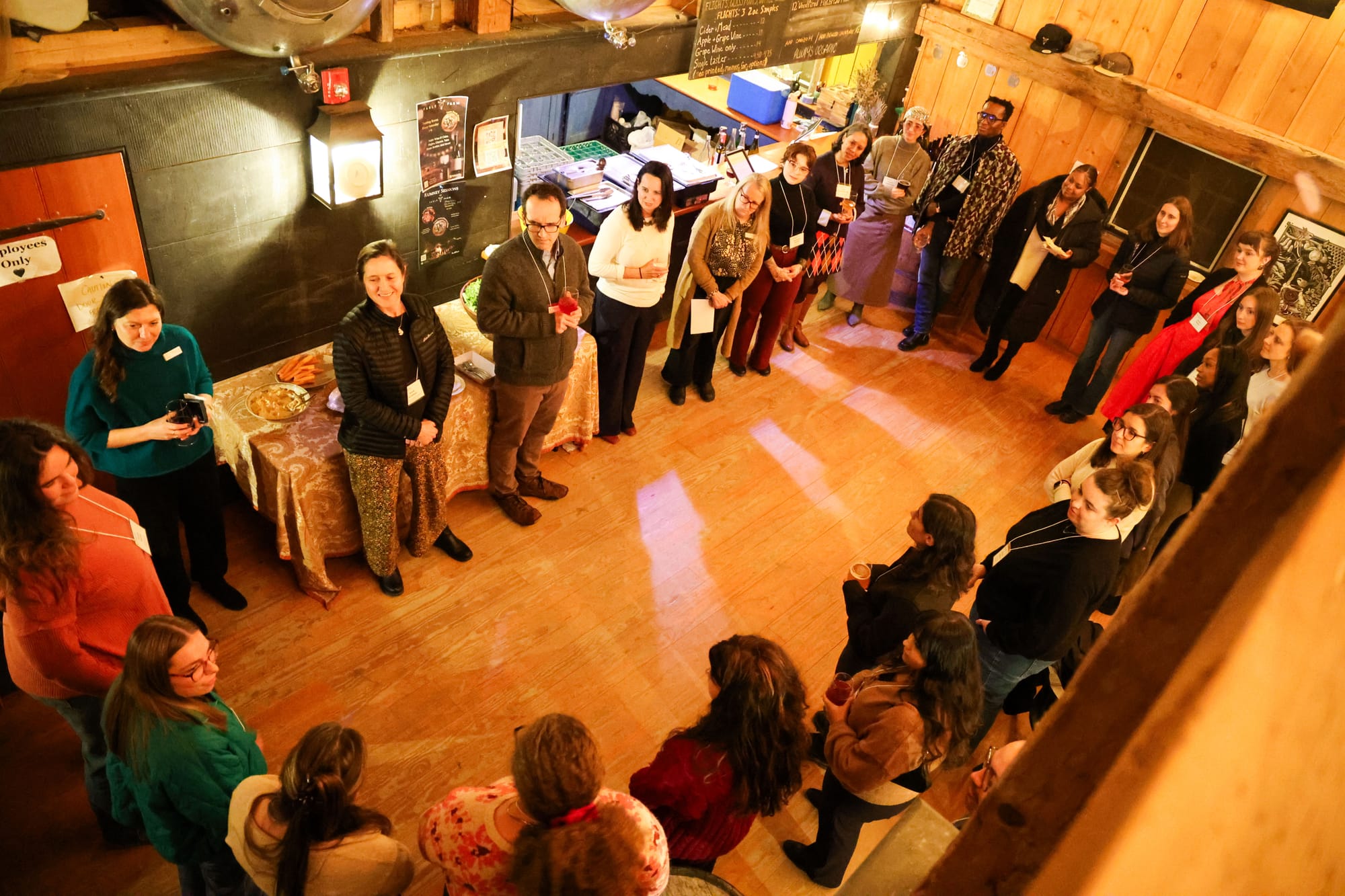
Last week, we gathered a small group of our students for a dinner at Fable Farm, a fermentory farm in Barnard that is a centerpiece of the local food system. We often visit this magical spot in the summer, with summer faculty or to take in the iconically-Vermont community music series, Feast and Field.
These students are among our current "environmental and social justice mission scholars," a very special cohort who come to law school expressly committed to a cause and with a plan to make a difference for their communities and the world.
It was a deep dark Vermont evening in mid-November, end of semester deadlines waiting back at campus; in celebration of their commitment, I joined these dedicated young people for a warm meal of almost totally local foods in a barn that serves as a community hub throughout the year. They spoke of their plans to strengthen sustainable local food systems, tackle solid waste pollution in Haiti, promote restorative justice in the criminal justice system, make the fashion world more sustainable, and much more.
To them, this is not a nadir, but the launch of their careers. Despite the ongoing psychological toll of the climate crisis and environmental injustice (and institutional betrayal), their antidote is learning and action. They have righteous impatience with capitalistic rationalization of environmental and human health harms, a driving passion for supporting environmental justice communities, and fewer preconceived notions about what works and what doesn’t. I was reminded of the commencement exhortations of Earthjustice President Abbie Dillen, a veteran of the last quarter-century of environmental law who has been a leading voice against BAAJA, when she told our graduating students: "For people who want to make change in the world, this is the time for that. And you are those people!"
We will do our best to help them. They give us hope that this low point is also a beginning.